
Managed security
Cybersecurity services for Michigan businesses
The controls your insurer asks about, run by people who watch the alerts.
A cybersecurity company in Metro Detroit: endpoint detection and response, 24/7 SOC monitoring, identity and email security, awareness training, and the evidence your auditor or cyber insurer wants to see.
What's included
A security baseline, then monitoring behind it.
Endpoint detection & response
EDR on every device with managed detection and response behind it: alerts reviewed by people around the clock, and isolation actions agreed in advance.
24/7 SOC monitoring
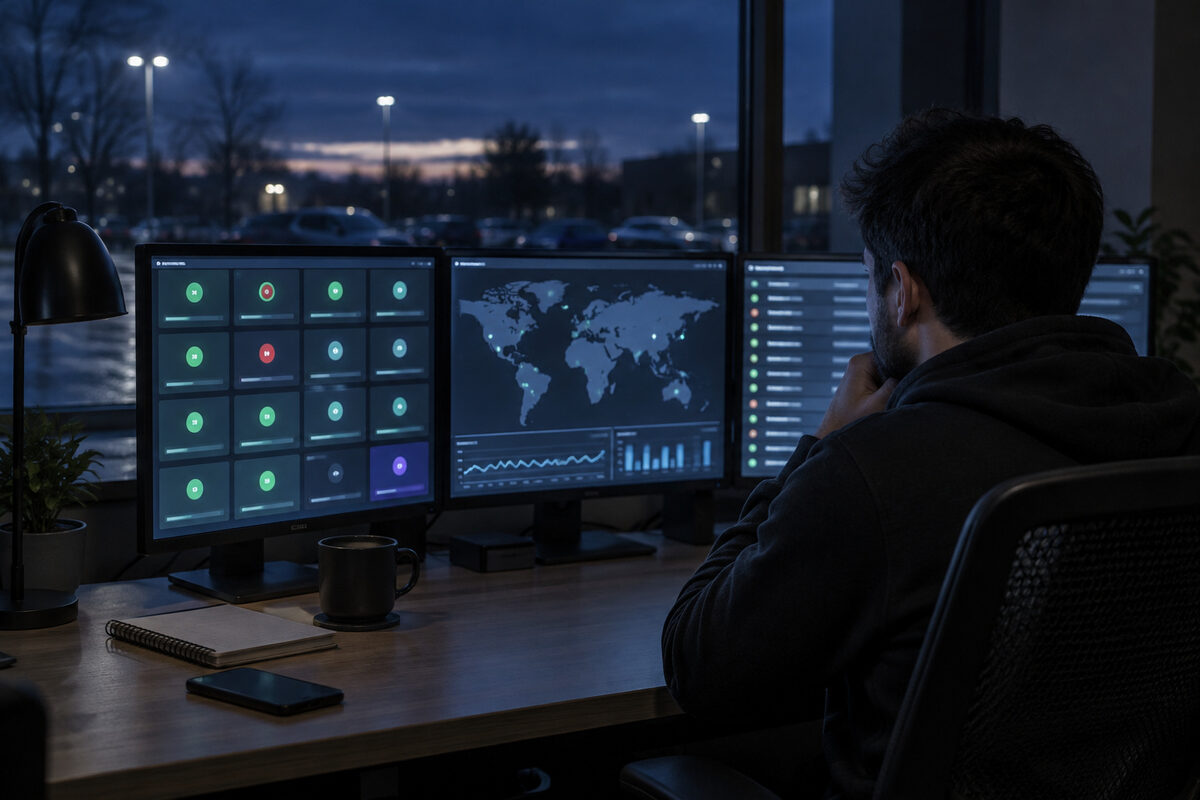
Sign-ins, endpoints, email, and the Microsoft 365 tenant watched by a security operations team that calls you when something is wrong, not a dashboard you are expected to check.
Identity & access management
Enforced MFA, conditional access, least-privilege admin accounts, and a documented onboarding and offboarding process for every user.
Email security & awareness training
Filtering for phishing, impersonation, and payment fraud, plus security awareness training and phishing simulations so staff recognize what gets through.
Backup & ransomware recovery
An immutable backup copy an attacker cannot delete, restores tested on a schedule, and a written recovery plan, because the security question that matters most is how fast you are back.
Vulnerability & patch management
Operating systems, applications, and firmware scanned and patched on a schedule, with the exceptions documented and a date to close them.
Security baseline & hardening
A standard configuration for workstations, servers, firewalls, and the Microsoft 365 tenant, aligned to CIS Controls v8.1 IG1 and mapped to NIST CSF 2.0.
Compliance evidence
The reports and screenshots your cyber insurance application, HIPAA risk analysis, PCI questionnaire, or FTC Safeguards Rule review asks for, produced from the tools rather than written from memory.
Incident response
A written plan for the first hour, containment steps agreed in advance, and your cyber insurer engaged first, because most policies require it.
In detail
Why security is a separate page
Every managed IT seat at LNX includes a baseline: EDR, MFA, and email filtering. This page is the full stack on top of it, for businesses whose insurer, regulator, or own close call has raised the bar. It can be bought with managed IT, added to an environment your own IT staff run, or layered onto another provider's support. The tools are the same either way; what changes is who is watching and what they are allowed to do when an alert fires.
What a security engagement looks like
It starts with a review: what you run, who can reach what, what an attacker would find first, and where you stand against the controls your insurer or regulator lists. The review ends in a ranked list with costs. Then the baseline goes in, followed by monitoring. From then on you get a monthly report of alerts, patch status, backup results, and training completion, and the evidence pack when renewal or audit season comes around.
What we will not claim
We do not certify anyone, and we will not sign a compliance attestation on your behalf. Your auditor, examiner, or insurer decides whether you comply. What we do is run the controls, keep the evidence, and show which control each tool covers, so that conversation is short. Michigan businesses in healthcare, financial services, auto retail, and defense manufacturing usually have a specific framework in mind, and we map to it.
Who this is for
Businesses renewing cyber insurance, practices under HIPAA, dealers under the Safeguards Rule, and anyone who had a close call.
Every industry we serve pulls on this area differently. Jump to yours to see what it usually looks like.
How engagements run
No mystery scope, no surprise change orders.
- 01
Walk it
We look at the space, the stack, or the drawing set before quoting anything.
- 02
Scope it
A fixed written scope: what is included, what is not, who does what, and when.
- 03
Run it
One project manager owns it end to end and stays your contact after handoff.
Related services
Usually bought together, or one after the other.
Where we work from
Cybersecurity from Troy and Pontiac, Michigan.
Remote support covers any location. On-site work across Metro Detroit is scheduled from the nearer office.
Our cyber insurance application asks about MFA, EDR, and backups. Can you help?
Yes. Those questions are the baseline. We put the controls in, then produce the evidence the application or renewal asks for, from the tools rather than from memory.
Can you add security to IT support we already have?
Yes. The security stack runs alongside another provider's or your own IT team's support. We agree in writing who does what when an alert fires.
What happens if we are hit by ransomware?
Call the number in your agreement. Isolation steps are agreed in advance, so the first hour is containment, not a debate. Then restore from the immutable backup copy, and work through your cyber insurer's process, which usually has to be engaged before anything else.
Do you follow a security framework?
Our baseline is aligned to CIS Controls v8.1 Implementation Group 1 and mapped to NIST CSF 2.0. For HIPAA, PCI DSS, the FTC Safeguards Rule, and CMMC we map the same controls to that framework's language.
How much does cybersecurity cost?
Per seat per month for monitoring and tooling, with the initial review priced separately. Quotes are firm after the review, and nothing in it obliges you to buy the rest.
Tell us what's in front of you.
A drawing set, a failing switch, an audit deadline, or a hunch that IT costs too much. We'll tell you who picks it up and what it takes.